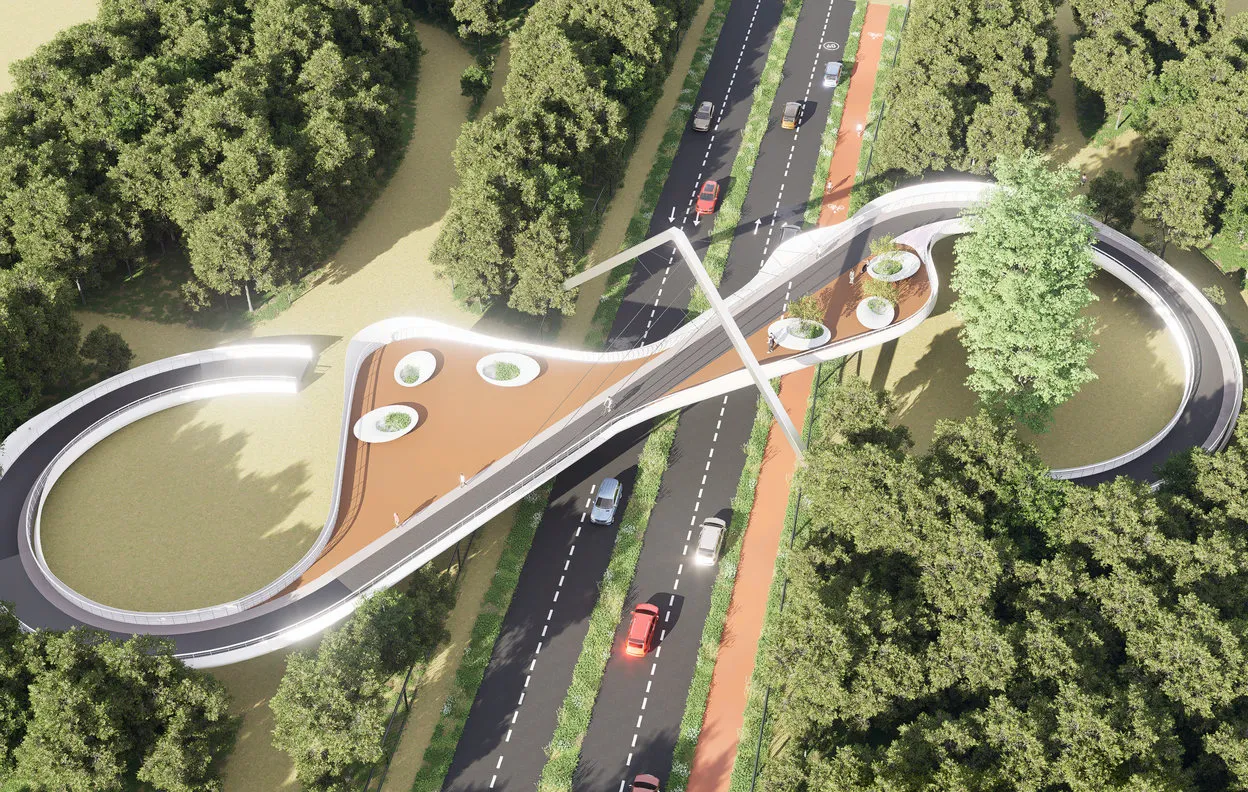
Wrenze Steel is a steel bridge design consultant in Dubai and across the UAE for real estate developers, municipalities, architects and engineering consultancies. Our engineers carry out the structural analysis and design of steel pedestrian bridges, link bridges between towers and vehicle bridges in accordance with AISC 360, the AASHTO LRFD specifications and ASCE 7-16, together with the requirements of Dubai Municipality, the RTA and the authorities of the other emirates, using advanced structural analysis software including nonlinear, cable and dynamic analysis. Our bridge portfolio includes full consultancy to Dubai Municipality for the Mushrif Park cable-stayed bridge.
Steel bridge design services in Dubai and the UAE
- Pedestrian and cycle bridges: footbridges over roads, waterways and parks, with stairs, ramps and lift towers
- Cable-stayed bridges: masts, stay cables and decks, analysed with nonlinear and cable analysis
- Link bridges between towers: high-level bridges joining buildings, with articulated supports for differential movement
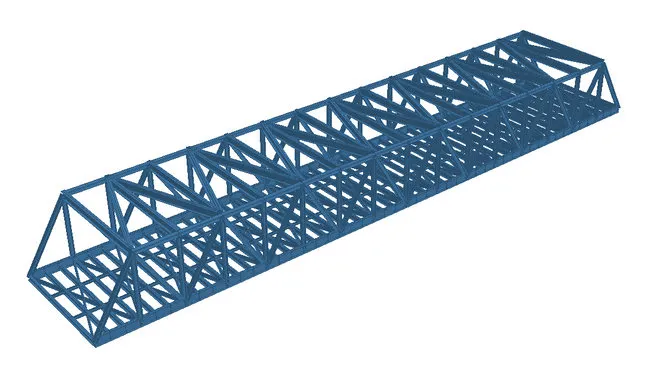
- Truss and arch bridges: arched truss spans and lattice bridges
- Temporary and floating bridges: heavy-duty construction access bridges designed for truck loading
- Steel elements of road bridges: steel girders, bearings, parapets and bridge accessories
The engineering of steel bridges
- Long spans and slender decks: spans, depths and deck stiffness are set for strength, deflection and appearance.
- Pedestrian comfort and vibration: footbridges are light and long, so vertical and lateral vibration under walking and crowd loading is controlled within comfort limits.
- Cable structures: cable-stayed bridges require nonlinear analysis of the cables and deck, with construction-stage and cable-loss scenarios checked.
- Movement and bearings: thermal expansion, tower sway and deck movement are accommodated through bearings and expansion joints.
- Wind and seismic actions: exposed decks, masts and parapets are designed for wind pressure, uplift and seismic actions.
- Fatigue and durability: repeated pedestrian and vehicle loading is checked for fatigue at welded details, with corrosion protection for the UAE climate.
Structural analysis and design
Our engineers develop a three-dimensional analysis model of each bridge and verify:
- Strength and stability of every member to AISC 360, including second-order effects
- Pedestrian and vehicle loading to the AASHTO LRFD specifications
- Modal analysis and vibration response under pedestrian and crowd loading
- Nonlinear cable analysis for cable-stayed bridges
- Deflection, camber and movement at the bearings
- Connections, splices, bearings and anchorage through detailed connection analysis
- Fatigue at critical welded and bolted details
Bridge verification by our steel bridge design consultants
Alongside design, our engineers provide independent steel design verification of bridge designs prepared by others, and full consultancy to authorities and developers.
Selected bridge projects
- Mushrif Park cable-stayed bridge, Dubai: full consultancy to Dubai Municipality, with nonlinear, cable and vibration analysis
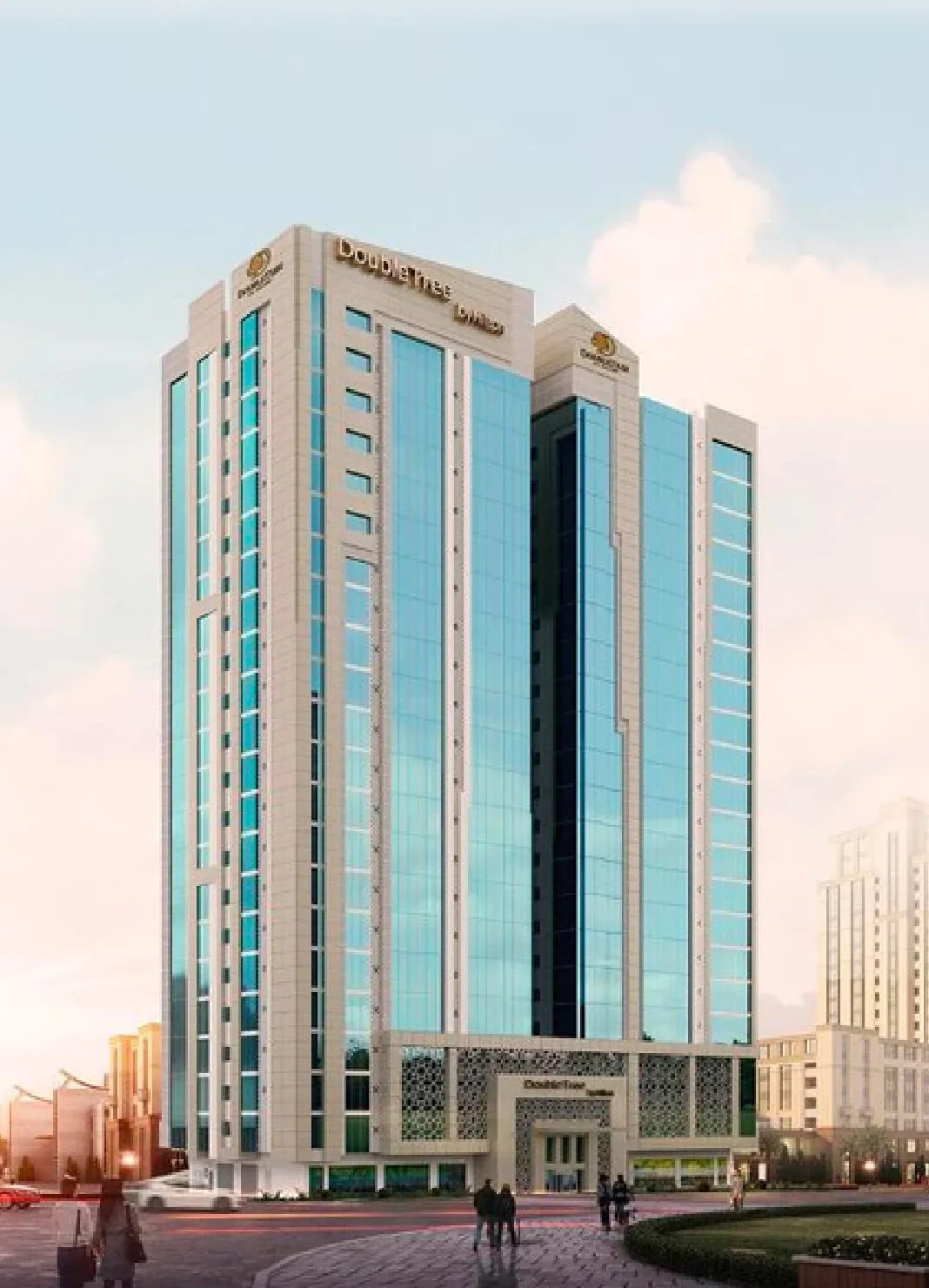
- DoubleTree twin tower link bridge, Ras Al Khaimah: a 20 m steel link bridge between two towers
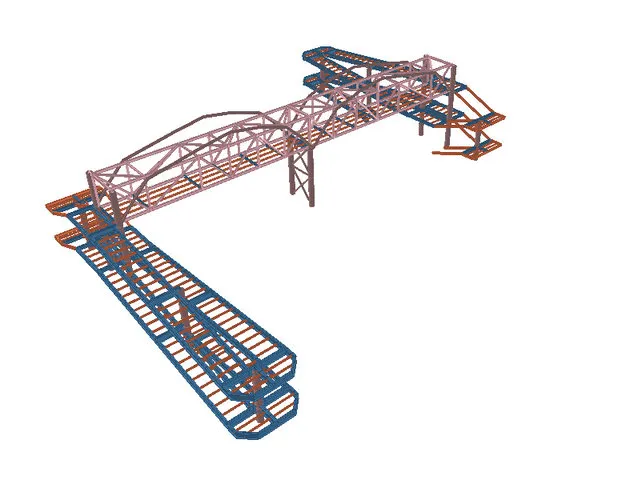
- Parsons pedestrian bridge, Dubai: steel design verification of a twin-arch footbridge
- Ramhan Island causeway and floating bridge, Abu Dhabi: heavy truck bridges to AASHTO
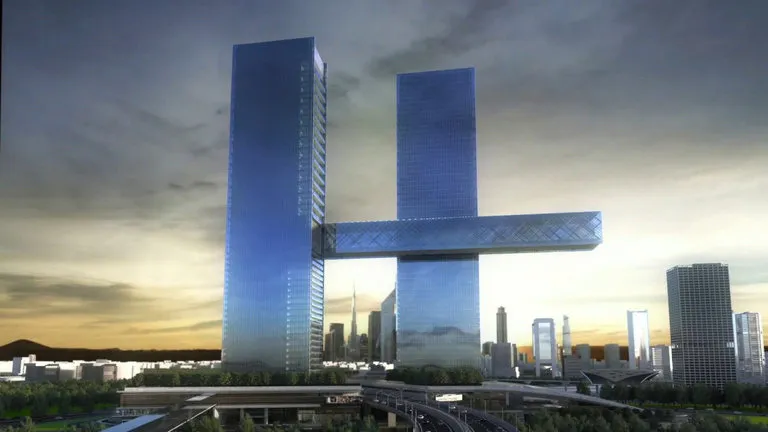
- One Zabeel link bridge, Dubai: the interior metal ceiling of the world’s longest cantilevered building
See more bridge projects, our structural steel design service, or contact our engineers about your bridge.