Steel tower design in Dubai is design against the wind: a tower is a tall cantilever from the ground, its own weight is small compared with the wind it collects, and everything ends as overturning at a compact base. Wrenze Steel provides structural steel design of freestanding towers and masts in Dubai and across the UAE, for real estate developers, architects and engineering consultancies, contractors and steel fabricators. We design the tower structure, its platforms and access, the splices and connections, the base plates and anchor bolts, and coordinate with the equipment supplier, the architect and the foundation designer.
Crowns and features on top of buildings are covered on our tower crown steel structure page, and multi-storey steel buildings on our high-rise steel structure design page. This page covers towers that stand on their own foundations.
Steel tower design in Dubai: the towers and masts we design
- Lattice towers: three- and four-legged towers in angles or tubes, for antennas, lighting, signage and equipment
- Monopoles: tapered tubular or polygonal poles, with slip joints or flanged splices
- Guyed masts: slender masts held by guy cables to ground anchors
- Observation and viewing towers: towers with stairs, a lift and viewing platforms for visitors
- Lighting and floodlight masts: high masts for roads, ports, car parks and sports grounds
- Flag masts: tall landmark flagpoles carrying large flags in strong wind
- Steel-framed minarets, clock towers and landmark towers: steel frames clad in GRC, stone or metal (see GRC support steel frames)
- Rooftop masts: masts and towers on existing buildings (see rooftop steel structures)
Wind on towers and masts
Wind governs nearly every member of a tower. How it is calculated depends on the form:
- Lattice towers: wind force depends on the solidity ratio of each face and on the wind direction. A square tower is checked face-on and diagonally, because the diagonal case often governs the legs.
- Ancillaries: antennas, dishes, ladders, cable trays, platforms and lights can collect more wind than the tower members. We take each item, its area and its position from the equipment list, and allow for future equipment where the owner requires it.
- Monopoles and round shafts: force coefficients depend on the shape of the section and the surface roughness.
- Codes: wind loads follow ASCE 7-16 Chapter 29 for trussed towers and other structures, ANSI/TIA-222-H for antenna-supporting structures, or EN 1993-3-1 where the specification requires it. Our page on wind load calculation for steel structures in the UAE covers the basis.
Dynamic response, vortex shedding and fatigue
Tall, light towers are flexible. Where the natural frequency is low, we apply the gust effect factor for flexible structures in ASCE 7-16 so the dynamic part of the wind is included. Round and polygonal shafts are also checked for vortex shedding: in a steady wind, vortices leave the shaft alternately from each side, and if their frequency matches the tower’s natural frequency the tower oscillates across the wind. The response is controlled by helical strakes, a tuned mass damper or a change in stiffness.
Repeated oscillation makes fatigue part of the design. The details that matter most are the welds at the base flange, the flange splices and slip joints of monopoles, the bolts in tension and the anchor bolts. We check these to AISC 360 Appendix 3, choose details with good fatigue categories, and specify bolt preload where it protects the bolts from cyclic stress.
Guyed masts
A guyed mast is light, but its behaviour is nonlinear: the guys sag, stiffen as they tension and change force with temperature. We analyse guyed masts with nonlinear analysis, set the guy pretension, check the mast for buckling between guy levels and design the guy anchors for uplift and sliding. The mast is also checked for the loss of a guy, so a single damaged guy does not lead to collapse.
Observation towers
An observation tower carries people as well as wind. Viewing platforms are designed for crowd loading, the stairs and lift for their own loads and movement limits (see steel staircase design), and the sway at the viewing level is checked for comfort under frequent winds, as well as for strength under design winds. Barriers and balustrades are designed for the loads in ASCE 7-16.
Base, foundations and anchor bolts
Overturning from wind becomes large tension in the anchor bolts on one side and compression on the other. Base plates, anchor bolt groups or anchor cages, and the concrete around them are designed together to ACI 318 Chapter 17, for tension, shear, concrete breakout and pull-out. Base reactions for every load combination are issued to the foundation designer. Our base plate and anchor bolt design page covers these details.
Durability, access and aviation
- Galvanizing: lattice towers are usually hot-dip galvanized, and the galvanizing bath size sets the maximum member length and the splice layout
- Bolted connections: site connections are bolted, with bolt grades and locking methods suited to vibration
- Access: climbing ladders with fall arrest, rest platforms and work platforms at equipment levels
- Aviation: obstruction lights and markings for tall structures, coordinated with the requirements of the aviation authority, and lightning protection
Analysis and design
Each tower is modelled in three dimensions with its ancillaries, under self-weight, equipment, wind from every direction, seismic and thermal load combinations, including second-order effects. Member design follows AISC 360, welded connections follow AWS D1.1 and anchorage follows ACI 318, with ASCE 7-16 or ANSI/TIA-222-H for loading, together with Dubai Municipality or the municipality of the project’s emirate.
What our steel tower design consultants deliver
- A design basis covering the height, the equipment list, the wind basis and the serviceability limits
- Structural calculations for the legs, bracing, shaft, platforms, guys and splices
- Connection designs for the splices, flanges, guy attachments and base plates
- Design drawings: tower elevations, sections, platform and ladder layouts and typical connections
- Base reactions and anchor bolt layouts for the foundation designer
- Calculations and drawings for authority approval, with responses to comments
How a tower project runs
- You send the height, the equipment and antenna list, the site location and the soil information.
- We agree the scope and the programme.
- We propose the tower type, with lattice and monopole options compared when useful.
- We complete the analysis, member design and connection design.
- We issue the calculations and drawings for review and answer the comments.
Related tower, mast and wind-governed projects
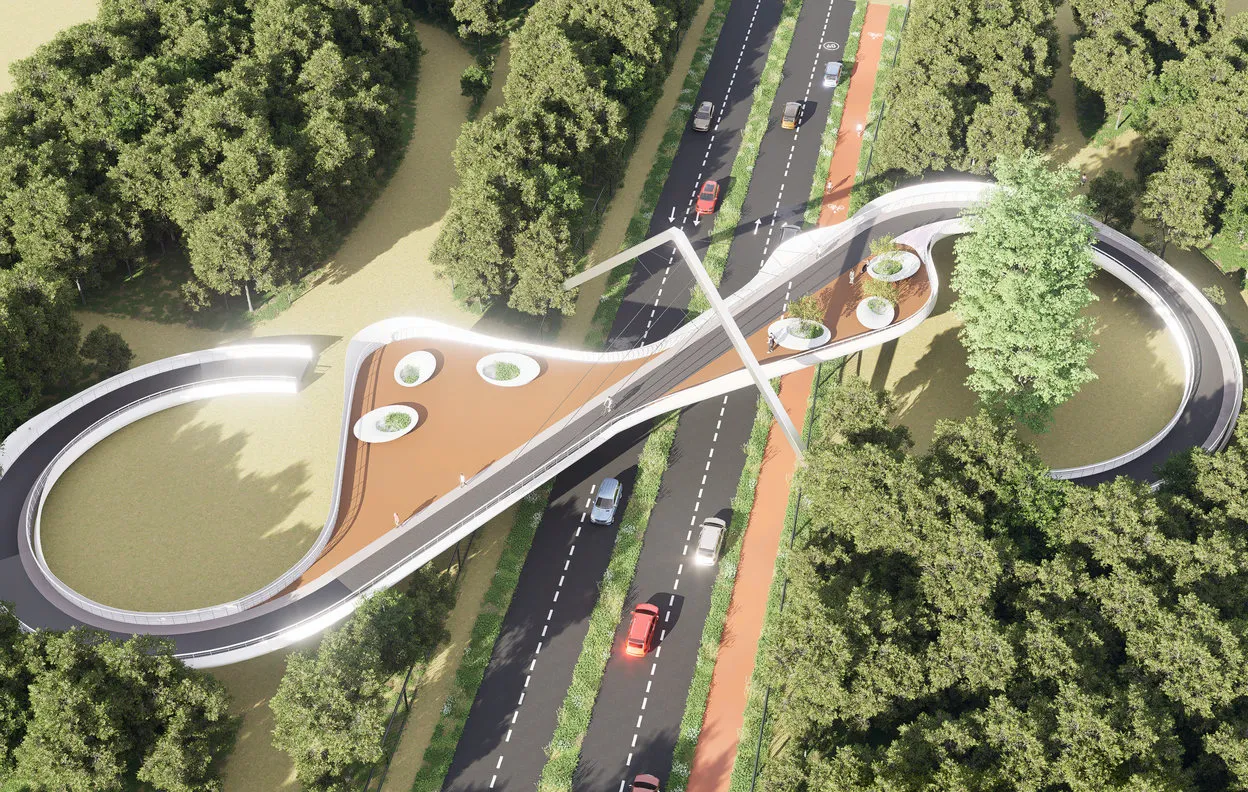
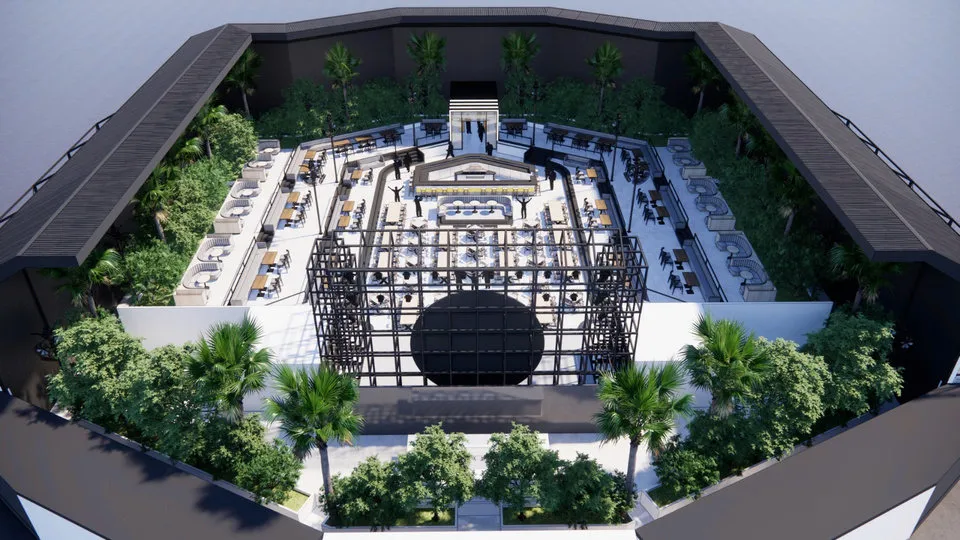
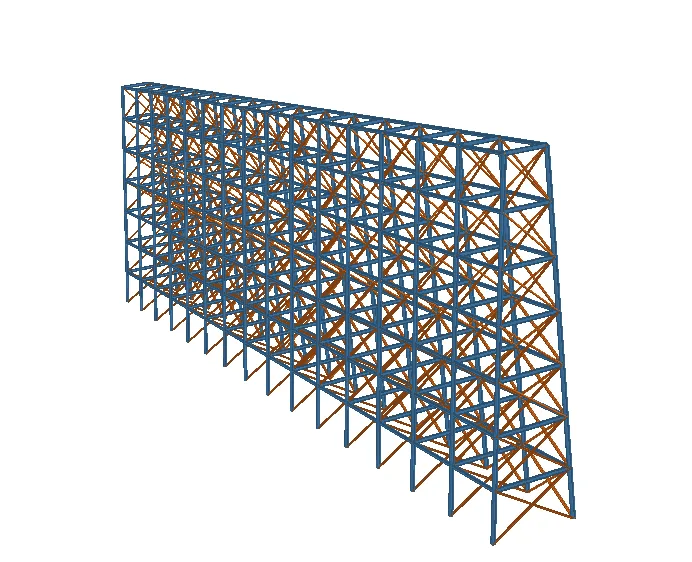
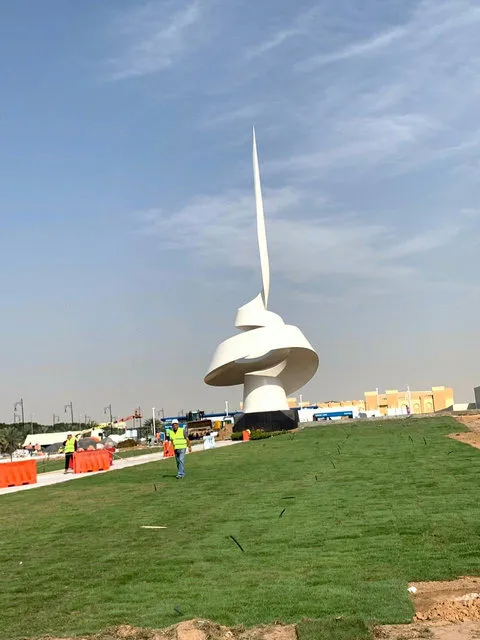
Our related work includes the 75 m long, 24 m high street advertising board in Dubai, a freestanding steel frame where wind governs nearly every member, connection and base, designed as a deep two-layer braced frame for overturning and checked for wind-induced vibration. For Monument Sharjah, a steel ribbon rising into a tall, slender spire, we carried out the independent steel design verification, including the dynamic response, vortex shedding and fatigue at welded details. The Mushrif Park bridge in Dubai is carried by a single inclined steel mast in compression and bending, with the cable anchorages designed as concentrated load points. The Acoustic Hall at Festival City stands on built-up laced columns designed to AISC 360 for chord and overall buckling. At the USA Pavilion, Expo 2020, our team built the 3D model and measured the quantities for the tall lattice rocket support frame.
About Wrenze Steel
- Our engineers hold Dubai Municipality practice certificates, and we prepare Dubai Municipality submissions through to approval.
- A steel structure design consultancy: towers, masts and other wind-governed structures are part of our work alongside buildings, bridges and industrial structures.
- 96 projects completed across the UAE and the GCC.
- Our office is in Dubai Silicon Oasis, and we work across the UAE and the GCC.
Related pages
Tower crown steel structure design · Billboard structure design · Sculpture steel structure design · Base plate design · All steel structure types
For a steel tower or mast, contact our engineers.